
Recently, the research team led by Prof. Xiang Yuan at East China Normal University has independently developed a collimated magneto-infrared spectroscopy system with in-situ polarization control. The team has carried out systematic validation of the overall architecture, key technical improvements, and comprehensive performance. For a long time, magneto-infrared spectroscopy under strong magnetic fields has lacked reliable in-situ polarization control due to several constraints, including the limited experimental space, polarization degradation caused by multiple reflections inside optical light tubes, and the need for repeated disassembly and thermal cycling during polarization switching. To address these challenges, the team introduced a collimated optical design combined with an external in-situ polarization module. This approach effectively suppresses polarization degradation in narrow magnet bores and enables continuous and controllable switching among linear, circular, and elliptical polarization states over a broad infrared range.
Experimental results demonstrate that the system operates stably under extreme conditions of 1.7 K and 12 T, achieving a minimum root-mean-square noise of 0.0033% and a maximum linear polarization extinction ratio of 40:1. Based on these performances, the team has realized continuous in-situ polarization-resolved measurements in magneto-infrared spectroscopy for the first time, clearly revealing polarization-dependent differences in material responses and providing a new experimental platform for high precision studies.
The related results were published under the title “In-Situ Polarimetry in Collimated Magneto-Infrared Spectroscopy System” in Advanced Scientific Instruments, the first English-language international academic journal in the field of scientific instruments in China.
Infrared spectroscopy carries not only frequency information but also polarization-dependent information related to symmetry and selection rules. Under strong magnetic fields, phenomena such as Landau-level transitions and cyclotron resonance are highly polarization-sensitive. However, multiple reflections in narrow light tubes degrade polarization, and conventional in-field polarization control is inefficient. To address this, the team developed a high-fidelity and efficient platform featuring:
1. Collimated optical design and polarization preservation: By employing a collimated optical path, multiple reflections inside narrow light tubes are significantly reduced. Stable polarization maintenance is achieved within a 50 mm magnet bore, with a maximum extinction ratio of 40:1.
2. In-situ polarization control capability: Under extreme conditions of 1.7 K and 12 T, continuous in-situ switching among linear, circular, and elliptical polarization states is realized through an external automated polarization module, with a minimum root-mean-square noise as low as 0.0033%.
3. Compatibility with multiple measurement configurations: The system supports both Faraday and Voigt geometries, as well as transmission and reflection modes, meeting the requirements of polarization-resolved magneto-infrared spectroscopy under extreme conditions.
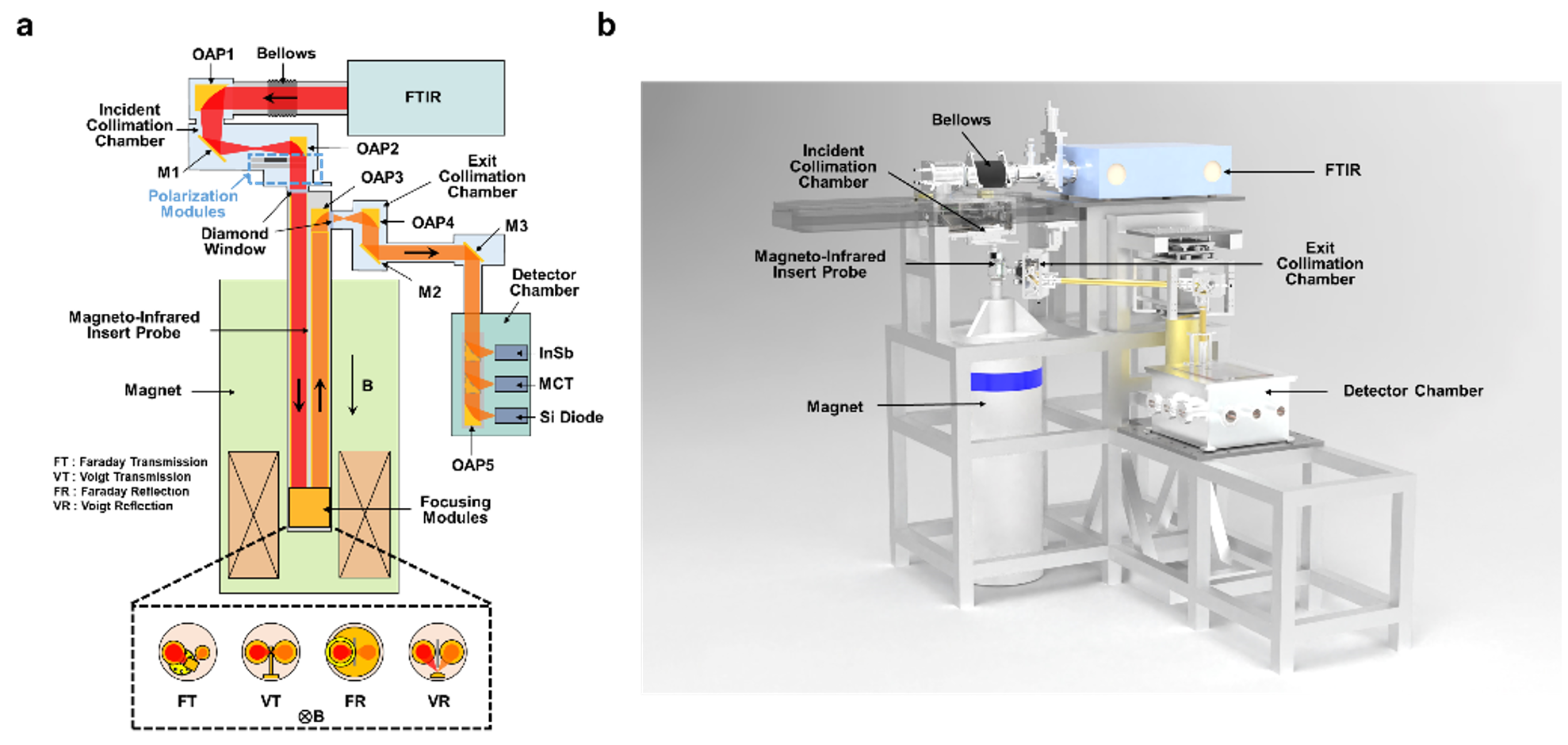
Figure 1. Schematic diagram of the magneto-infrared spectroscopy system
As shown in Figure 1, the system consists of a Fourier-transform infrared spectrometer (FTIR), an incident collimation chamber, a magneto-infrared insert probe, a superconducting magnet, an exit collimation chamber, and an external detector chamber. The infrared beam emitted from the FTIR enters the incident collimation chamber, where it is collimated and modulated by the in-situ polarization module before being coupled into the insert probe. The beam propagates along the probe to the sample at the center of the magnetic field. After interacting with the sample via focusing module, the transmitted or reflected signal is collected and guided back through the probe, directed into the detector chamber via the exit collimation chamber for detection. Through the coordinated design of collimated optics and external polarization control, the system maintains high optical throughput while effectively suppressing polarization degradation, enabling stable polarization-resolved measurements under low-temperature and high-magnetic-field conditions.
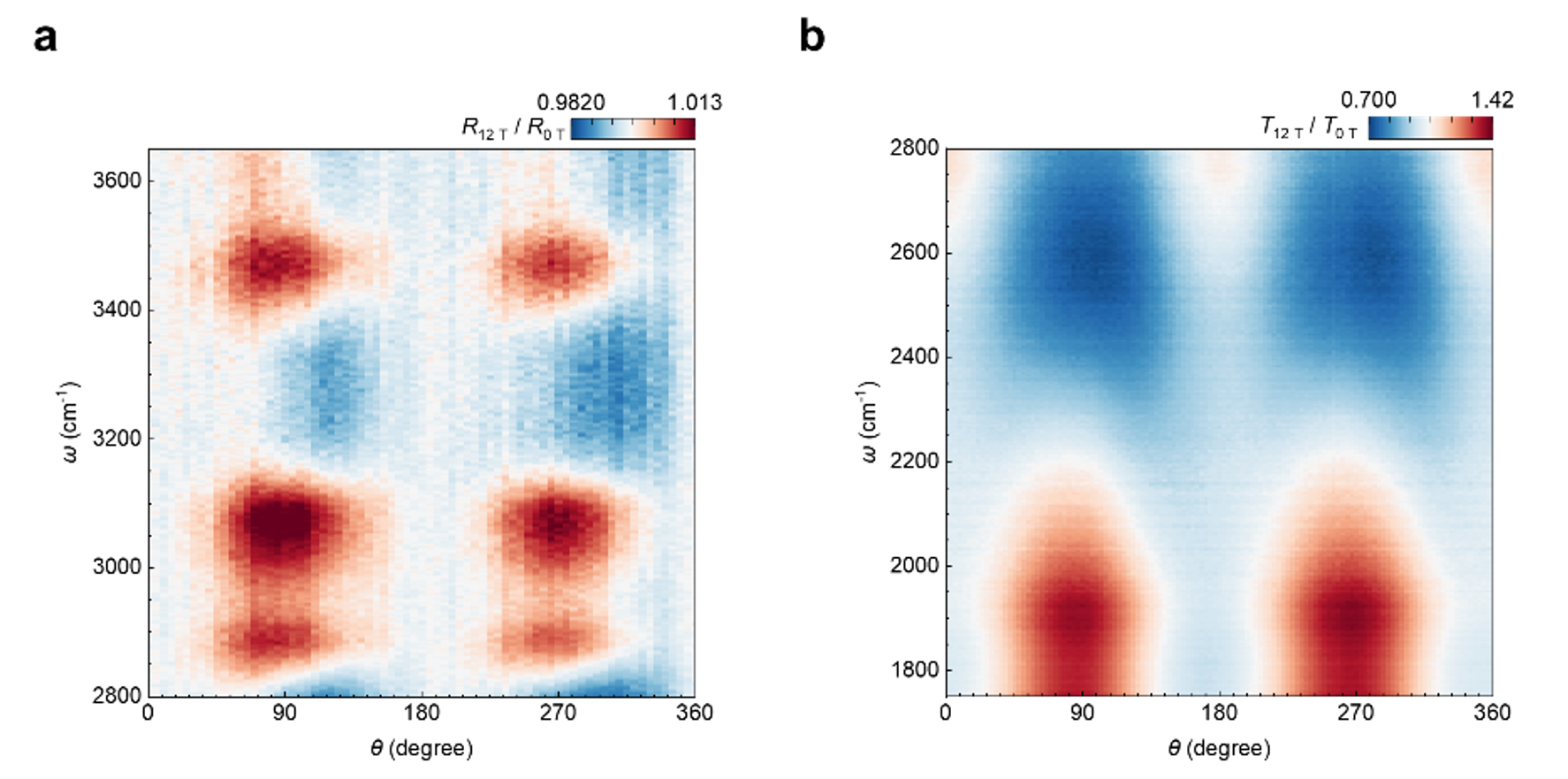
Figure 2. In-situ polarization measurement results under low-temperature high-magnetic-field conditions
Based on the system performance, the team carried out in-situ polarization-resolved magneto-infrared spectroscopy under low temperature and strong magnetic fields and obtained experimentally meaningful results. As shown in Figure 2, under fixed temperature and magnetic field conditions, continuous tuning of the incident polarization leads to pronounced polarization dependence in spectral features associated with magnetic-field-induced excitations. The same spectral features exhibit significantly different intensity distributions and response signs under different polarization states, reflecting the strict polarization selection rules governing optical transitions in magnetic fields. These results demonstrate that the system can not only achieve stable in-situ polarization-resolved measurements but also directly distinguish magneto-infrared responses corresponding to different selection rules. This provides key insights into physical processes such as Landau level transitions, cyclotron resonance, and magnetic-field-induced band evolution.
This work was recently published in Advanced Scientific Instruments 1 (2026) 100005. Prof. Xiang Yuan of East China Normal University is the corresponding author. Postdoctoral researchers Zeping Shi and Wenbin Wu, PhD student Yuhan Du, and master's student Zhiwei Zhang, Chenyao Xu are co–first authors. The research was supported by the Ministry of Science and Technology of China, the Ministry of Education of China, the National Natural Science Foundation of China, the Shanghai Municipal Commission of Science and Technology, and the Shanghai Municipal Commission of Education.
See also:https://doi.org/10.1016/j.asi.2026.100005。