
Recently, Yuan group has successfully and independently developed a high-signal-to-noise-ratio (SNR), high-flux magneto-infrared spectroscopy system. The team carried out a systematic verification of its overall architecture, key technical improvements, and comprehensive performance. This work overcomes the long-standing limitations of conventional high-magnetic-field infrared spectroscopy systems in optical throughput, signal-to-noise ratio, and measurement efficiency. With the help of the imaging optical system designed, the magneto-optical SNR is improved by more than two orders of magnitude, enabling the stable resolution of extremely weak magnetic-field-induced spectral changes at the 10-4 level. This system provides a new experimental platform for precision spectroscopic studies under high magnetic fields.
The setup is compatible with commonly used 7-30 T magnets. It covers a wavelength range of 0.5-200 μm with a spectral resolution of 0.2 cm-1, supports all four magneto-optical transmission/reflection geometries (Faraday/Voigt + transmission/reflection), and operates over a temperature range of 1.7-300 K.
The related work, entitled "A High-Flux and High-Efficiency Setup for Magneto-Infrared Spectroscopy" has been published online in Review of Scientific Instruments. Infrared spectroscopy is an essential tool for probing the electronic structure and low-energy excitations of materials. Under high magnetic fields, magneto-infrared spectroscopy can directly reveal key physical processes such as cyclotron resonance, Landau quantization, and the evolution of topological band structures, offering unique advantages in the study of magnetic and topological quantum materials. However, traditional high-magnetic-field infrared spectroscopy systems have long faced challenges in detecting weak signals due to limited experimental space, severe optical flux loss, and low measurement efficiency.
To address this critical bottleneck, the research team independently designed and constructed a high-flux, high-efficiency magneto-infrared spectroscopy system. Through systematic optimization of the optical path, focusing optics, and detection scheme, the overall performance has been significantly enhanced, enabling stable resolution of magnetic-field-induced spectral signals as weak as 10-4. The system provides comprehensive capabilities for high-magnetic-field, multi-band, high-precision magneto-infrared spectroscopy measurements in multiple configurations, offering an advanced and reliable experimental platform for precision spectroscopy under high magnetic fields. The main performance improvements include:
1.High compatibility: Compatible with commonly used 7–30 T magnets; supports all four magneto-optical transmission/reflection geometries (Faraday/Voigt + transmission/reflection); variable-temperature measurements from 1.7 to 300 K; optical wavelength coverage from 0.5 to 200 μm.
2.High measurement efficiency: Supports the switching and measurement of at least eight samples in a single cooldown. With a control program, the system enables automatic switching of light sources, beam splitters, detectors, and samples.
3.High flux and high signal-to-noise ratio: Using an imaging optical system. Compared with conventional magneto-optical setups, the optical throughput is significantly enhanced, leading to an improvement of more than two orders of magnitude in SNR (up to 16,000), enabling stable resolution of magnetic-field-induced spectral signals at the 10-4 level.
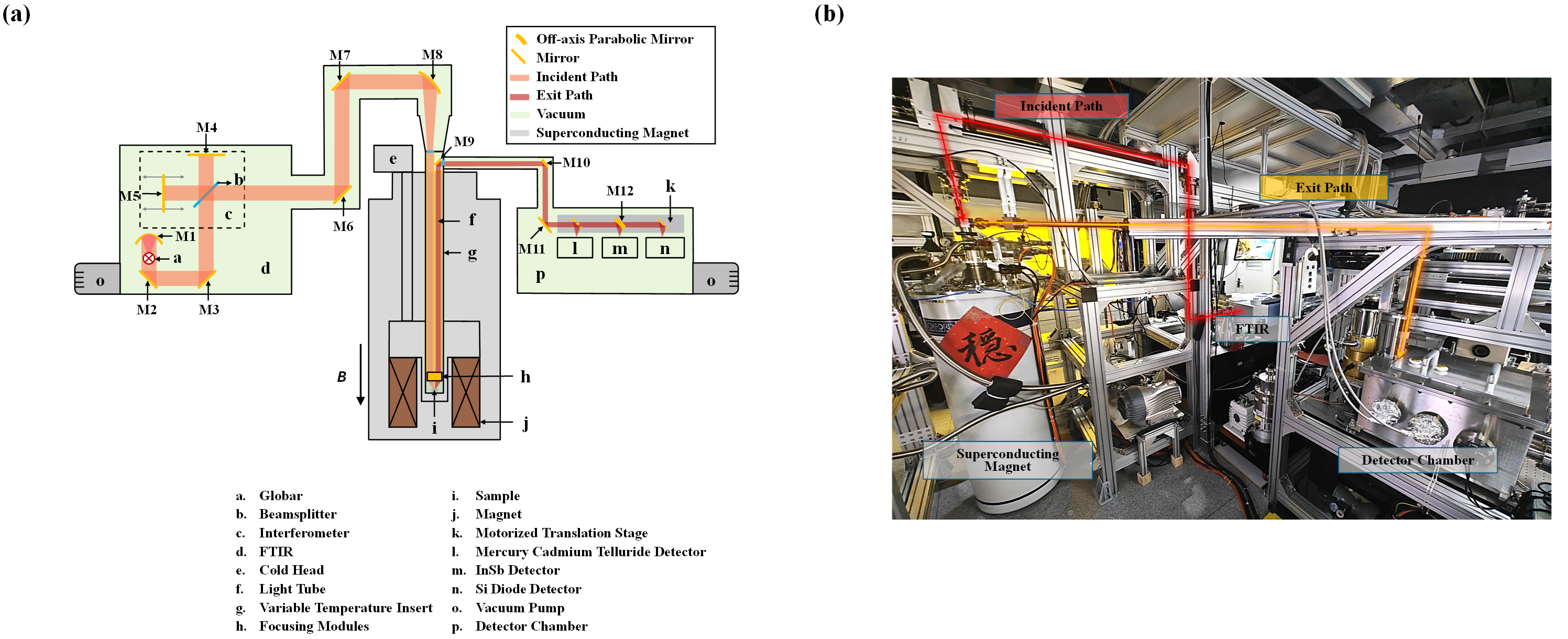
Figure 1. Schematic design of the high-magnetic-field infrared spectroscopy system.
A schematic diagram of the magneto-infrared spectroscopy system constructed by the research team is shown in Fig. 1. The system consists of five main submodules: a Fourier-transform infrared spectrometer (FTIR), a cryogen-free superconducting magnet, internally polished gold-coated optical waveguides, focusing assemblies suitable for different magneto-optical measurement geometries, and an external detection chamber with automatic switching among multiple detectors. The modulated infrared beam exits the FTIR and is guided to the top optical window of the magnet, then transmitted through the incident optical waveguide to the center of the superconducting magnet. After being focused onto the sample, the transmitted or reflected light is collected by the focusing optics. The signal beam is then guided out of the magnet via the exit waveguide and directed into an external vacuum detection chamber, which houses a set of infrared detectors—including bolometers, MCT, InSb, and Si diodes—covering different spectral ranges. To effectively reduce interference from atmospheric absorption, the external optical path is maintained under low-pressure conditions, while the sample temperature is controlled by a variable-temperature insert (VTI) with helium exchange gas. The overall optical system is highly integrated and supports automated multi-parameter control.
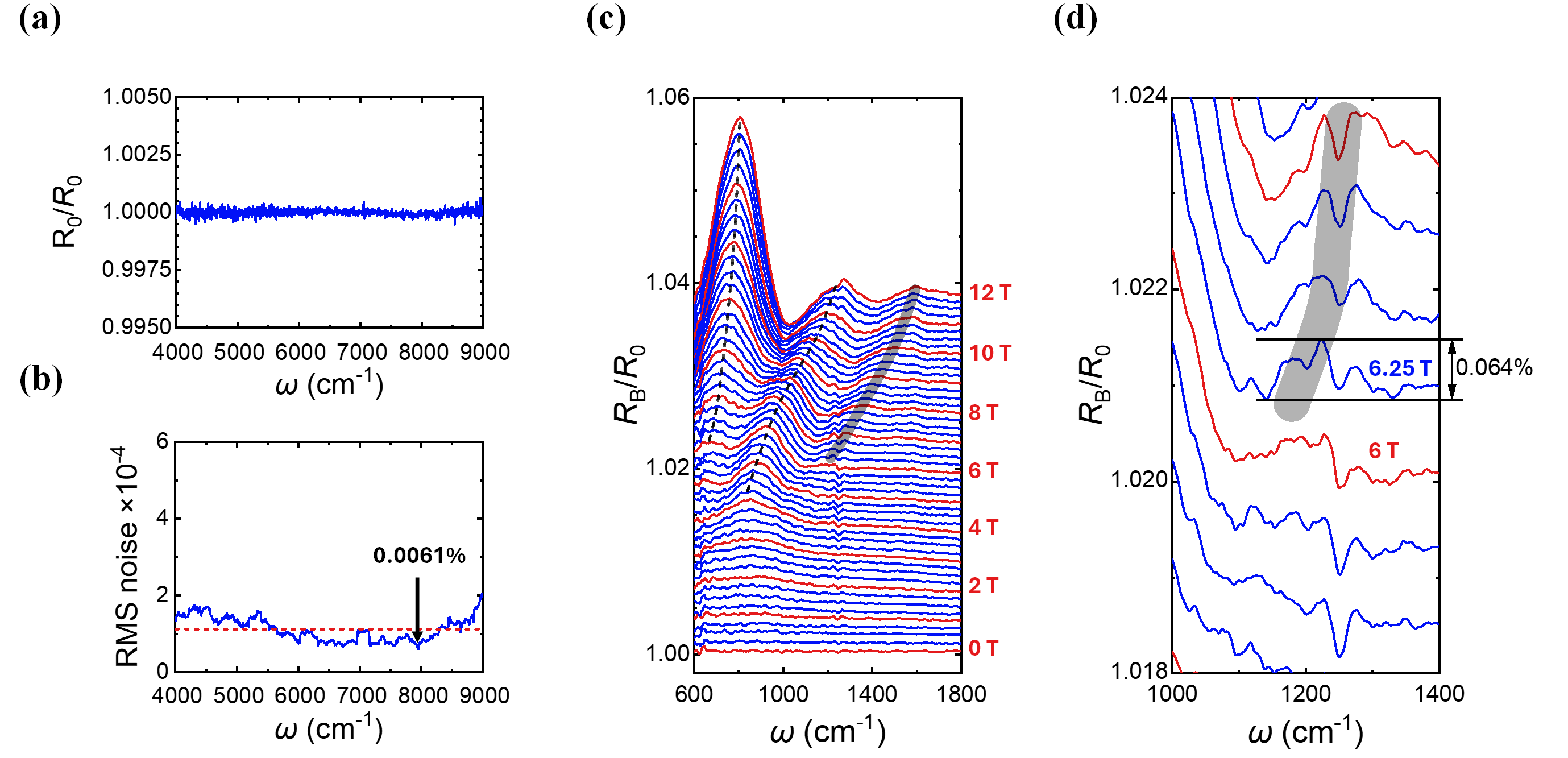
Figure 2. Tests of the signal-to-noise ratio and weak-signal resolution capability of the system.
The research team conducted systematic tests of the system's signal-to-noise ratio and weak-signal resolution capability. By taking the ratio of two infrared spectra acquired consecutively from the same sample under identical experimental conditions, the noise level of the system was quantitatively evaluated for short integration times. The results show that with an integration time of 1 minute, the system achieves a minimum root-mean-square noise level of approximately 0.0061%, which is significantly better than the ~1% noise level typical of conventional magneto-infrared experimental setups. The team also performed magneto-infrared spectroscopy measurements on the (110) surface of the topological semimetal LaAlSi, successfully observing extremely weak Landau-level transition features and clearly resolving spectral signals with an intensity amplitude as low as 0.064%. These results convincingly demonstrate the excellent signal-to-noise ratio and stability of the system, highlighting its high sensitivity to weak magnetic-field-induced spectral signals. Such outstanding performance lays a solid foundation for high-precision magneto-infrared spectroscopy studies.
This work was recently published in Review of Scientific Instruments 96, 113902 (2025). Prof. Xiang Yuan of East China Normal University is the corresponding author. Postdoctoral researchers Zeping Shi and Wenbin Wu, PhD student Yuhan Du, and master's student Zhiwei Zhang are co–first authors. This research was supported by the Ministry of Science and Technology, the Ministry of Education, the National Natural Science Foundation of China, the Science and Technology Commission of Shanghai Municipality, and the Shanghai Municipal Education Commission.
See also:https://doi.org/10.1063/5.0296925